
 The Central Regional Coordinating Council (CRCC) has reviewed progress made in addressing teenage pregnancy, sexual and gender-based violence, child marriage, domestic violence, and other adolescent reproductive health challenges in the Central Region.
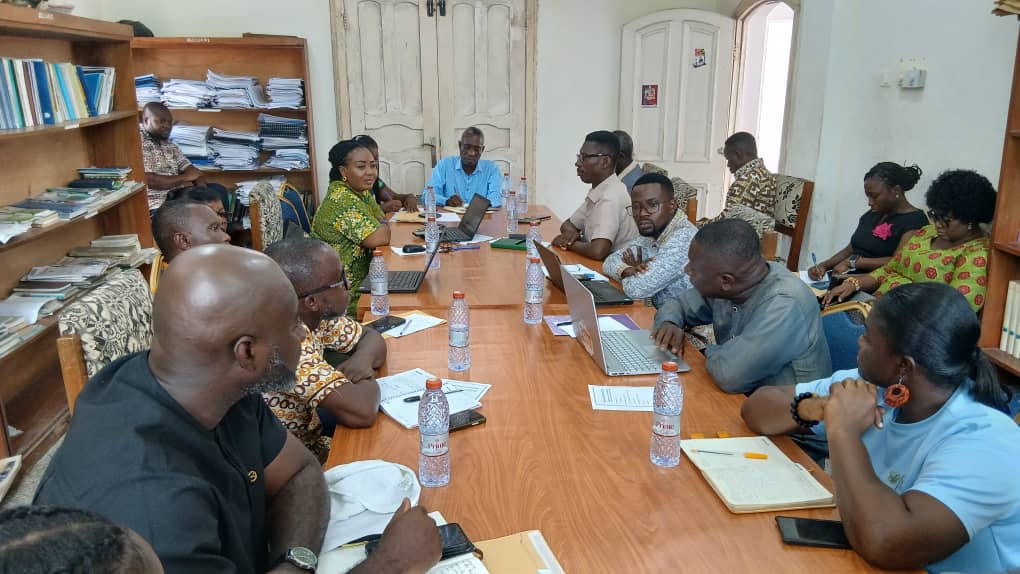
The review took place during the Council’s Second Quarter 2026 Coordination Meeting with Sub-Implementing Partners and other stakeholders on 23 April 2026 at the CRCC Conference Room in Cape Coast. The meeting brought together 30 participants, comprising 20 males and 10 females, to assess previous interventions, discuss implementation challenges, and develop strategies for achieving better results with available resources.
The meeting was held as part of efforts to strengthen collaboration among implementing partners and ensure the effective use of resources provided by the United Nations Population Fund (UNFPA).
CRCC Highlights Progress in Adolescent Health Interventions
In his opening remarks, the CRCC Focal Person for UNFPA, Mr. David Allan Paintsil, highlighted the organisation’s longstanding support for interventions aimed at reducing teenage pregnancy, maternal mortality, sexual and gender-based violence, child marriage, and domestic violence in the region.
He explained that, over the years, implementing partners had undertaken public education and sensitisation programmes in schools, mechanical workshops, beauty salons, traditional palaces, and communities to raise awareness and address these social challenges.
According to Mr. Paintsil, interventions supported by UNFPA over approximately 13 years had contributed to several positive outcomes, including a steady reduction in teenage pregnancy in rural and urban communities.
He further noted that, because of limited resources, the CRCC was prioritising collaboration between state and non-state actors to minimise duplication of activities and maximise the impact of available funding.
For the second quarter of 2026, the Council was assigned two key activities: coordination meetings and joint monitoring exercises.
Ghana Health Service Reports Decline in Teenage Pregnancy
The Ghana Health Service (GHS) reported progress in adolescent health education, family planning advocacy, and the prevention of sexual and gender-based violence.
Presenting on behalf of the GHS focal person, Ms. Anna Obir-Bonney, a Public Health Nurse and Regional Adolescents Coordinator, explained that the Service had implemented programmes in six districts during the previous year: Cape Coast, Agona East, Upper Denkyira East, Awutu Senya East, Assin Fosu, and Komenda Edina Eguafo Abrem (KEEA).
The Service also supported activities in Awutu Senya and Gomoa East, where International Needs Ghana implemented interventions.
As part of its adolescent health initiatives, the GHS trained 409 adolescents aged between 12 and 17 years, comprising 139 males and 270 females, on sexual and gender-based violence and teenage pregnancy prevention. In addition, 35 nurses responsible for Senior High School infirmaries received training on managing sexual and gender-based violence.
Ms. Obir-Bonney indicated that follow-up visits to some school infirmaries showed that the training had helped nurses improve their practices and services.
Family Planning and Teenage Pregnancy Statistics
The GHS also reported an increase in family planning acceptors, from 36,902 in 2024 to 37,987 in 2025. The increase was attributed partly to improved availability of family planning commodities and strengthened advocacy among government institutions and non-governmental organisations.
Teenage pregnancy also declined from 10.5 per cent in 2024 to 9.6 per cent in 2025. According to Ms. Obir-Bonney, the Safe Space Programme contributed to this improvement by providing adolescents with appropriate information, services, and opportunities to build their confidence.
The Service also conducted an obstetric fistula outreach programme in eight communities within the KEEA Municipality. A total of 302 women were screened, and 26 were referred to hospital for further attention. Two obstetric fistula cases were identified, and the affected women were referred to Elmina Hospital for treatment.
The GHS indicated that a follow-up fistula programme was planned for the third quarter of 2026.
Department of Gender Intensifies Campaign Against Harmful Practices
The Regional Director of the Department of Gender, Ms. Richlove Amamoo, reported that her department had engaged 41 traditional leaders, comprising 30 females and 11 males, on child marriage, sexual and gender-based violence, and harmful cultural practices.
The department also organised Safe Space activities for adolescent boys and men after recognising that they could also become victims of sexual and gender-based violence.
As part of its public education efforts, the department conducted sensitisation programmes for students at the Cape Coast School for the Deaf and Blind.
Under the Essential Package Programme, 312 boys benefited from an empowerment activity at Philip Quaicoe Boys School in Cape Coast. The initiative focused on raising awareness of sexual and gender-based violence.
The team also visited the Sexual and Gender-Based Violence Court at the Cape Coast Court Complex, observed court proceedings, and interacted with the presiding judge to gain practical insights into the handling of such cases.
Ms. Amamoo further disclosed that her office had trained Master of Philosophy students from the University of Cape Coast on sexual and gender-based violence and the legal framework for addressing domestic violence.
In collaboration with the Peace Council, the department also engaged 250 students of Ghana National College in Cape Coast on sexual and gender-based violence, teenage pregnancy, and student vigilantism. The participants comprised 180 girls and 70 boys.
DOVVSU Highlights Domestic Violence Cases and Calls for Improved Support
The Domestic Violence and Victim Support Unit (DOVVSU) of the Ghana Police Service highlighted the prevalence of assault, threats, defilement, and other offences in the region.
The newly appointed Regional Coordinator, Chief Inspector John Asare Bediako, reported that 215 people were arrested in connection with assault offences in 2025. Of these, 132 were males and 83 were females. He noted that some suspects had been convicted, while others were still facing trial.
The Unit also recorded 130 cases involving threats of harm and 68 cases involving threats of death. In addition, 65 stealing cases and 43 defilement cases were recorded during the year.
Chief Inspector Bediako noted that the figures indicated a decline in recorded defilement cases, although the issue remained a concern requiring continued attention.
Protection of Vulnerable Persons
The DOVVSU Coordinator raised concerns about reported cases of widows being forced out of properties belonging to their deceased spouses. He said the Unit intended to engage communities on the relevant provisions of PNDC Law 111, which deals with intestate succession, to improve public awareness and protect the rights of affected persons.
He also expressed concern about the lack of a dedicated care home for minor survivors of sexual and gender-based violence in the region. The absence of such a facility means that some survivors must rely on the shelter provided by the Department of Social Welfare.
He therefore called for the establishment of an appropriate shelter to provide protection and support for vulnerable survivors.
The meeting also heard concerns about the need for body cameras for DOVVSU investigators and cameras in interrogation rooms. According to Chief Inspector Bediako, these tools could help preserve evidence, improve accountability, and strengthen the prosecution of alleged offenders.
In response, Mr. Paintsil indicated that he would forward the request for camera equipment to the UNFPA office in Accra for consideration.
National Youth Authority Engages Faith-Based Youth Leaders
The National Youth Authority (NYA) reported that it had engaged youth leaders from faith-based organisations on child marriage, sexual and gender-based violence, and adolescent sexual and reproductive health rights.
The initiative was intended to equip youth leaders with the knowledge needed to educate their communities and contribute to reducing harmful cultural practices and unwanted pregnancies.
The NYA also indicated that the Central Regional Pragyia Tricycle Riders Association had requested additional sensitisation for its members on sexual and gender-based violence, family planning, child marriage, and adolescent pregnancy.
The Authority planned to engage 60 faith-based youth leaders during the third quarter of 2026 to strengthen their understanding of these issues and support community-level education.
CEGRAD Strengthens Community-Based Advocacy
The Centre for Gender Research, Advocacy and Documentation (CEGRAD) at the University of Cape Coast reported that it had organised programmes to educate women leaders in communities surrounding the university on preventing child marriage, sexual and gender-based violence, and adolescent sexual and reproductive health challenges.
The programmes reached 141 participants against an initial target of 100. Of the participants, 127 were females and 14 were males.
The beneficiary communities included Essuakyire, Ankaful, Mpeasem, Kwapro, Kokodo, and Abura.
The Director of CEGRAD, Professor Eunice Fay Amissah, explained that the centre was building networks with women’s groups in these communities to help reduce incidents of sexual and gender-based violence.
She also highlighted collaboration with the University Teachers Association of Ghana (UTAG) Women’s Branch at the University of Cape Coast to address sexual and gender-based violence involving lecturers and students, as well as incidents among students.
However, she expressed concern about resource constraints, which meant CEGRAD had no activity scheduled for implementation during the year. She urged the CRCC and UNFPA to revive their research partnership to strengthen evidence-based advocacy against child marriage, gender-based violence, and adolescent pregnancy.
Ghana Education Service Promotes Adolescent Health Education
The Ghana Education Service (GES) reported progress in gender-responsive education and adolescent health awareness.
According to the Central Regional Coordinator for Girl Child Education, Ms. Priscila C. Eshun, the Service trained 662 students at Komenda Senior High School in April 2026 on using the internet for their studies. The participants comprised 310 boys and 352 girls.
A similar programme conducted at Aburaman Senior High School in Abura Dunkwa in February 2026 reached 509 students, including 303 girls and 206 boys.
The GES also organised adolescent health education for 766 students at Agona Nyakrom Senior High School in February 2026. These comprised 372 girls and 394 boys.
Ms. Eshun explained that adolescent health education had become a priority as the Service strengthened its efforts to reduce teenage pregnancy.
She, however, acknowledged challenges in compiling reliable school-level teenage pregnancy data because of inconsistencies in the figures reported by different schools.
International Needs Ghana Expands Safe Space Activities
International Needs Ghana reported that delayed fund releases in the previous year had affected the implementation of some Safe Space activities in Awutu Senya and Gomoa East.
Despite these challenges, the organisation continued working in 15 communities across the two districts. It trained 94 facilitators to support educational activities for boys, girls, and parents.
The Programme Officer, Mr. Isaac E. Ofori, reported that the Safe Space Programme reached 833 boys, 1,181 girls, and 360 parents.
He also highlighted the importance of collaboration with the Ghana Health Service, Ghana Education Service, and the Department of Social Welfare in strengthening participation and expanding the programme’s reach.
International Needs Ghana indicated that it would continue its activities in the 15 communities in 2026.
PPAG and National Population Council Strengthen Reproductive Health Education
The Planned Parenthood Association of Ghana (PPAG) reported extensive reproductive health education and outreach activities during 2025.
According to Programme Officer Ms. Staphanie Panford, the organisation conducted peer education campaigns through radio and social media, reaching an estimated 1.6 million people.
The association also counselled 81,636 adolescents, while 15,771 received family planning education. The report further recorded 3,832 sexually transmitted infection cases and 80,000 HIV tests conducted during the year.
PPAG also received and distributed 69,000 male condoms and 33 female condoms. The organisation noted that the utilisation of female condoms remained low.
Meanwhile, the National Population Council (NPC) reported that it had organised three radio education programmes on reproductive health rights and family planning through Asase Radio and Castle FM in Cape Coast.
The Council also engaged hairdressers in Elmina, Anafo in Cape Coast, and Assin Fosu on HIV prevention and the importance of safer sexual practices.
Traditional Authorities and Other Stakeholders Commit to Collaboration
The Registrar of the Central Regional House of Chiefs, Mr. Elijah Kwesi Asare, assured participants that the House was ready to facilitate the involvement of traditional leaders in community programmes and public education activities.
His assurance reinforced the importance of traditional authorities in promoting behavioural change, addressing harmful cultural practices, and extending awareness campaigns to communities.
Participants also discussed possible ways to improve funding for adolescent reproductive health programmes at the district level. A proposal was raised for Metropolitan, Municipal and District Assemblies to allocate 0.1 per cent of their Common Fund to support such interventions.
Mr. Frederick Nyame, a Senior Development Planning Officer at the CRCC, indicated that he would consult his superior and seek to have the proposal considered at the next Regional Economic Planning Committee meeting.
Key Achievements and Lessons Learned
The meeting highlighted several achievements recorded through the interventions of the CRCC and its partners.
These included the implementation of all 24 activities approved for 2025, a decline in teenage pregnancy from 10.5 per cent in 2024 to 9.6 per cent in 2025, and increased community participation in education on child marriage and harmful cultural practices.
The treatment of two women identified with obstetric fistula during outreach activities in the KEEA Municipality was also highlighted as a positive outcome.
Furthermore, sensitisation programmes had helped female apprentices better understand the importance of family planning commodities in preventing unwanted pregnancies.
A major lesson from the meeting was that implementing partners could achieve meaningful results by using limited resources judiciously and working collaboratively. Participants also emphasised the value of partnerships among government agencies, civil society organisations, traditional authorities, educational institutions, and other stakeholders.
Way Forward
The CRCC and its partners identified continued monitoring and successful implementation of approved activities for the third quarter of 2026 as a key priority.
Other issues raised during the meeting included the need for improved support services for survivors of sexual and gender-based violence, better access to resources for implementing partners, stronger public education on harmful cultural practices, and sustained collaboration in addressing adolescent reproductive health challenges.
The discussions underscored the importance of maintaining coordinated action among stakeholders to protect vulnerable groups and promote healthier, safer communities throughout the Central Region.
Conclusion
The Central Regional Coordinating Council’s Second Quarter 2026 Coordination Meeting provided an opportunity for implementing partners to review progress, share experiences, identify challenges, and strengthen their collective approach to adolescent health and social protection.
Although resource limitations and gaps in support services remain significant concerns, the achievements reported by the participating institutions demonstrate the value of sustained community engagement and collaboration.
As the CRCC and its partners prepare to implement activities for the third quarter of 2026, continued coordination, effective monitoring, and the strategic use of available resources will remain essential to advancing efforts against teenage pregnancy, child marriage, sexual and gender-based violence, and domestic violence in the Central Region.