
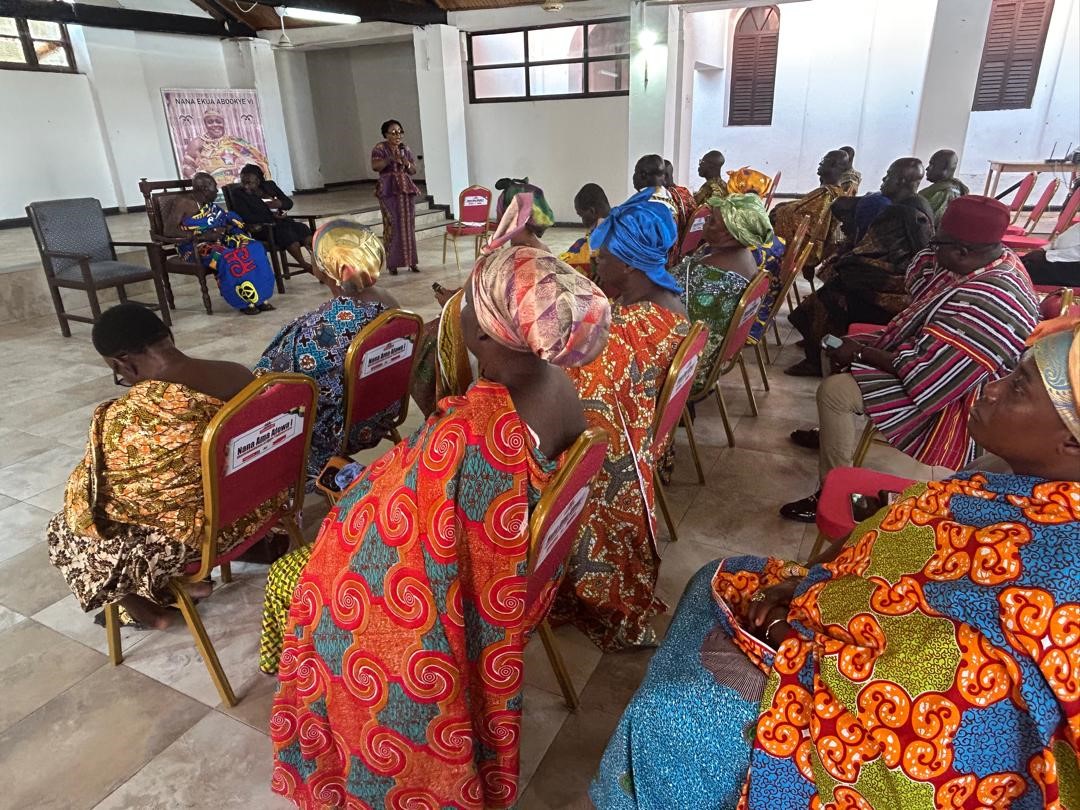
The Central Regional Coordinating Council (CRCC), through its Department of Gender, has engaged traditional authorities in the Oguaa Traditional Area to strengthen community efforts to address child marriage, teenage pregnancy, gender-based violence (GBV), and other harmful cultural practices affecting women and children.
The engagement, organised with support from the United Nations Population Fund (UNFPA), took place at Obama Hall, the palace of the Oguaamanhen, Emintsimadze, in Cape Coast. It brought together 50 traditional leaders, comprising 30 males and 20 females, including chiefs, queen mothers, and other community leaders.
The meeting sought to strengthen the capacity of traditional authorities to promote gender equality, protect children’s rights, and support interventions aimed at improving the safety, health, economic security, and general well-being of girls.
Traditional Leaders Urged to Champion Social Change
The engagement highlighted the important role traditional authorities play in shaping community attitudes, influencing social norms, and promoting positive behavioural change.
Participants discussed the continuing effects of child marriage, teenage pregnancy, and other harmful cultural practices on children’s education, health, and future opportunities. Child marriage, in particular, was identified as a practice that can contribute to school dropout, early and unintended pregnancies, and increased risks to maternal health.
Osabarima Dr. Kwesi Atta II called for collective action to address harmful social practices, gender inequality, and child marriage. He encouraged traditional authorities to take the lead in promoting positive social values and protecting the rights of women and children in their respective communities.
The meeting also emphasised the need for sustained public education to challenge social attitudes that may inadvertently normalise teenage pregnancy and other practices that undermine the well-being of adolescents.
Department of Gender Highlights the Role of Queen Mothers
The Regional Director of the Department of Gender, Ms. Richlove Amamoo, facilitated discussions on the responsibilities of queen mothers in promoting gender equality and safeguarding the rights of women and children.
She underscored the importance of traditional leadership in preventing child marriage, harmful cultural practices, and gender-based violence.
Queen mothers were encouraged to become stronger advocates for girls’ education, women’s empowerment, and the protection of vulnerable groups. Their influence within communities was identified as an important resource for educating families, challenging harmful social norms, and encouraging positive behavioural change.
Participants also discussed the need to promote the participation of women in leadership and community development as part of broader efforts to achieve gender equality.
CHRAJ Educates Leaders on Child Protection and Legal Responsibilities
Representatives of the Commission on Human Rights and Administrative Justice (CHRAJ) educated participants on child neglect, child maintenance, and the legal protections available to children under the Children’s Act.
The session highlighted the responsibilities of parents and guardians in meeting children’s needs and protecting their rights. It also emphasised the importance of enforcing existing laws and strengthening child protection mechanisms.
Participants raised concerns about difficulties in enforcing child maintenance orders, particularly where some fathers fail to comply consistently with payment obligations.
The discussion reinforced the need for parents, guardians, community leaders, and relevant institutions to work together to ensure that children receive the care, protection, and support they require.
Stakeholders Address Gender-Based Violence and Harmful Practices
The engagement included discussions on the legal implications of defilement, rape, marital rape, and other forms of gender-based violence.
Participants received information on relevant legal provisions, including the Domestic Violence Act, 2007 (Act 732), and other child protection laws. The discussions stressed the importance of reporting cases of abuse to the appropriate law enforcement and child protection agencies.
Traditional leaders were reminded that cases involving sexual violence should not be handled solely through family negotiations or traditional settlements, as such approaches can undermine justice and the rights of survivors.
The meeting called for stronger collaboration between traditional authorities, government institutions, civil society organisations, and other stakeholders to ensure that cases are appropriately reported and addressed.
Community Concerns and Emerging Challenges Discussed
An interactive open forum provided participants with the opportunity to discuss pressing social challenges affecting adolescents and vulnerable groups in the Cape Coast Metropolis and other parts of the Central Region.
Issues raised included teenage pregnancy, child marriage, cohabitation, HIV, truancy, child sexual exploitation, substance abuse, and the influence of social media and foreign cultural practices.
Participants also expressed concern about unlawful activities involving the exploitation of children and adolescents, highlighting the need for stronger community vigilance and cooperation with the relevant authorities.
The discussions underscored the importance of continuous community sensitisation, parental guidance, effective law enforcement, and accessible support services in addressing these challenges.
Traditional Authorities Pledge Continued Community Sensitisation
One of the key outcomes of the engagement was the commitment by traditional leaders to intensify public education and advocacy within their respective jurisdictions.
Several leaders expressed interest in inviting the Department of Gender to organise additional sensitisation programmes in their communities.
Queen mothers also pledged to promote women’s participation in leadership, girl-child education, and community development.
Participants called for sustained education and empowerment programmes for adolescent girls, stronger community engagement, and the development and enforcement of appropriate community by-laws to discourage child marriage, teenage pregnancy, and other harmful cultural practices.
The commitments reflected a shared recognition that lasting change requires active participation from community leaders, families, government institutions, and development partners.
Collaboration Identified as Key to Sustainable Progress
The engagement highlighted the importance of cooperation between traditional authorities and stakeholder institutions in addressing social challenges and strengthening child protection.
Participants recognised that community ownership, continuous education, and coordinated interventions could improve the effectiveness of programmes aimed at preventing gender-based violence and harmful cultural practices.
The discussions also emphasised the importance of investing in girls’ education and empowerment. Such investments were identified as essential to reducing teenage pregnancy and child marriage, breaking cycles of poverty, and improving opportunities for self-reliance and socio-economic development.
The meeting further reinforced the need for traditional authorities to use their influence to promote positive social values, encourage respect for the rights of women and children, and support the enforcement of laws designed to protect vulnerable persons.
Conclusion
The follow-up engagement with traditional authorities marked an important step towards strengthening community-based efforts to address child marriage, teenage pregnancy, gender-based violence, and other harmful cultural practices in the Central Region.
By equipping chiefs, queen mothers, and other community leaders with information on child protection, gender equality, and relevant legal frameworks, the initiative sought to strengthen their capacity to promote positive social change.
The commitments made by participants underscored the importance of sustained community education, effective collaboration, and the enforcement of existing laws in protecting children and vulnerable persons.
The CRCC, through its Department of Gender and in collaboration with UNFPA and other stakeholders, continues to recognise traditional authorities as essential partners in building safer, more inclusive communities where women and children can enjoy their rights and fulfil their potential.