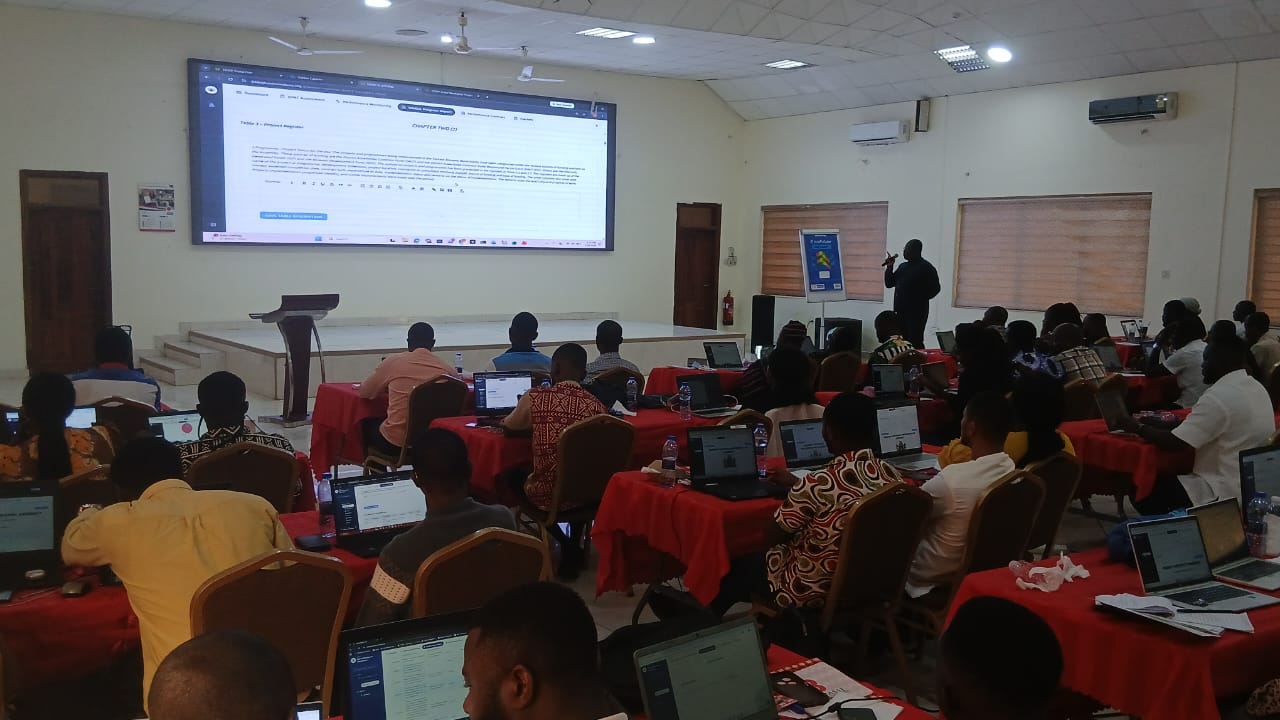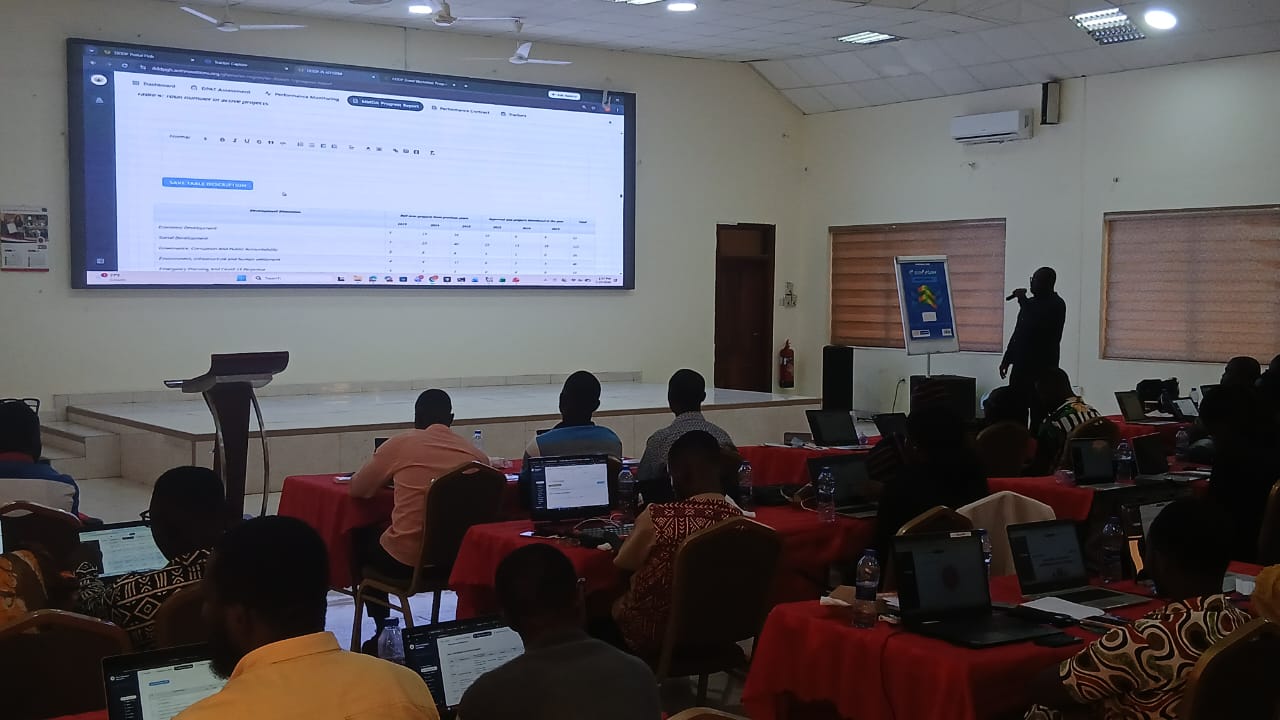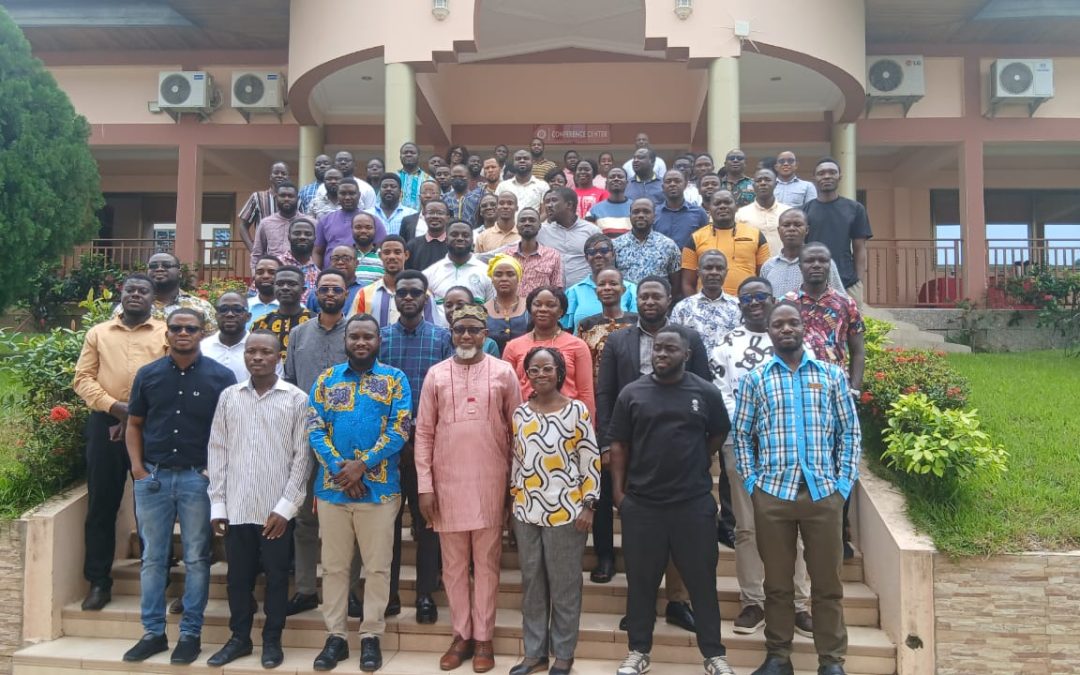
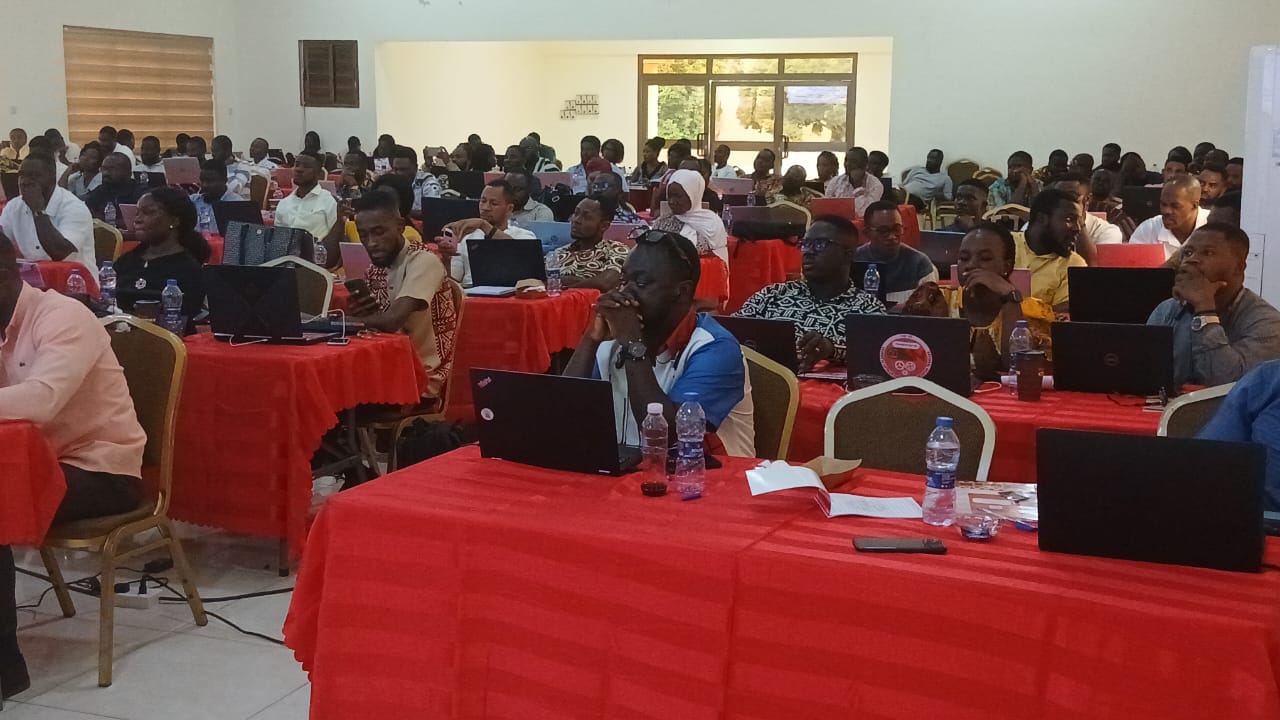
 The Ministry of Local Government, Chieftancy and Religious Affairs (MLGCRA) with support from GIZ organized the zonal District Development Data Platform (DDDP) training programme for users in Central region and Western region. The zonal training comprised Statisticians, Planning Officers, Management Information Systems (MIS) Officers, DDDP Regional Mobile teams, representative from the Office of the Head of the Local Government Service (OHLGS), representative from GIZ, and representatives from MLGCRA, and the DDDP Consultant. The zonal training took place on 28th July to 30th July 2026 at Pempamsie Hotel, Cape Coast.
In his welcome address, Rev. Isaac Asante Wiafe, the Regional Development Planning Officer for Central region welcomed all participants to the training workshop. Rev. Wiafe encouraged participants to ask questions and be fully involved because the DDDP platform now has a new user interface, new content registration portals and many other new features. With support from the Regional Mobile Teams, any further assistance or technical back-stopping that may be required will be provided, he added.
During her message, Mrs Gifty Owusu Benpah (Principal Programmes Officer) from the Ministry of Local Government, Chieftancy and Religious Affairs extended warm greetings from the Ministry and also encouraged participants to be more involving.
She mentioned that, from 2021 to 2023, DDDP went through significant expansion with attendant capacity building at sub-national level. During this period, the projects & programmes (P&P) Tracker and District Core and Specific Indicators were enhanced & digitized. Further integration and innovation was performed with the development of the Local System for Adaptation for ten(10) Green beneficiary MMDAs, development of District centre of Agriculture, Commerce & Technology (DCACT) trackers, and the integration of District Performance Assessment Tool (DPAT).
In addition, Mrs Owusu Bempah added that, the reporting and assessment components of the system was strengthen further during the period of 2024 to 2025 to improve efficiency, transparency and reporting processes with the development of DDDP public portal, integration of NDPC (APR) and submission of the APR by the 60 GIZ beneficiary Districts.
The DPAT module was enhanced with additional functionalities, development trackers and the deployment of the DPAT Assessment Portal for the conduct of DPAT IX assessment using the DDDP. The results we all know was not encouraging hence the need for this hands-on training.
Since 2025, the DDDP platform has undergone significant enhancement, Integration and expansion in its functionality and scope. DDDP is evolving into a unified governance, reporting, and administrative data platform through the integration of key national systems and datasets, including Ghana Statistical Service (GSS) administrative data systems, the Ghana Integrated Financial Management system (GIFMIS), the Urban Observatory, and other relevant platforms. This transformation has underscore critical role of digital innovation, improve public sector performance, promoting sustainable national development.
In her conclusion, she mentioned that, the session is to equip users with the newly developed user interface and build capacity. To equip users with knowledge and skills to effectively utilize the platform.
The training's opening section proceeded with Miss Elma Halm, a representative from GIZ. In her message, she mentioned that last year, the PAIReD programme, commissioned by the German Federal Ministry for Economic Cooperation and Development (BMZ), co-financed by the European Union (EU) and the Swiss State Secretariat for Economic Affairs (SECO), and implemented by GIZ in cooperation with the Ministry of Finance, supported NDPC to develop the APR submission module on DDDP.
Miss Halm added that the APR submission module enables MMDAs to prepare their APRs with the data they have captured on DDDP for all the development indicators and submit the report digitally to NDPC. She said, this functionality has now been extended for the use of Regional Co-ordinating Councils (RCCs).
In ending her message, Miss Halm drew the attention of the participants to the Configuration of Performance Contract Tracker on DDDP for OHLGS, and said it follows the exact manual template and is a digitized version of the manual process of conducting performance contract assessment by the OHLGS. The PAIReD programme remains committed to supporting processes necessary to maximize the potential and effective use of the platform.