
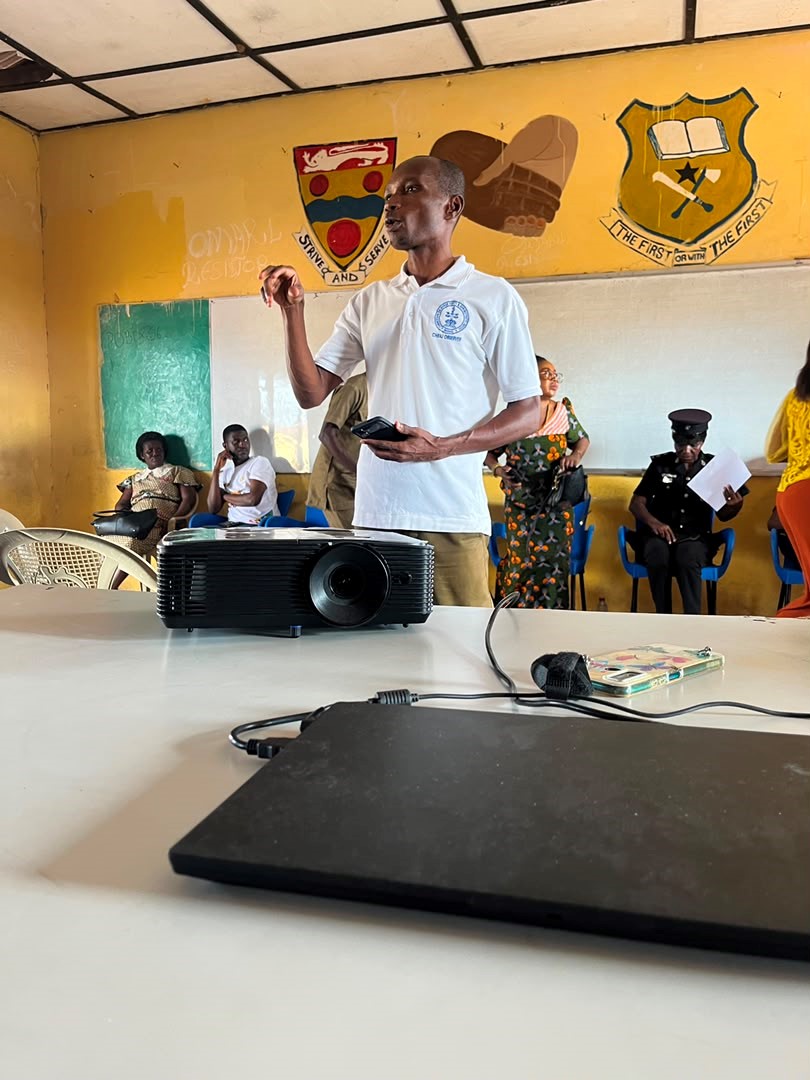
 Sixty-three adolescents have benefited from an outreach programme aimed at strengthening awareness of sexual and gender-based violence (SGBV), child protection, human rights, and access to essential support services at Elmina M/A Basic School in the Komenda-Edina-Eguafo-Abirem (KEEA) Municipality.
The outreach, held on 5 August 2026 at Nyanta, brought together students, teachers, and representatives of key public institutions to educate young people on preventing abuse, understanding their rights, and accessing appropriate protection, health, and legal services.
The programme was organised by the Department of Gender in collaboration with the Central Regional Coordinating Council (CRCC), with support from the United Nations Population Fund (UNFPA) Ghana, under an initiative to provide mobile outreach and gender-based violence essential information and services to Boys Safe Space participants in the Central Region.
The 63 adolescents reached comprised 41 males and 22 females aged between 10 and 19 years.
Strengthening Awareness of Gender-Based Violence
The programme sought to improve adolescents’ understanding of the forms, causes, effects, and prevention of sexual and gender-based violence, while equipping them with information on where to seek help when confronted with abuse, neglect, or exploitation.
Participants received education on rape, defilement, child neglect, parental responsibilities, human rights, and the legal implications of sexual abuse and other forms of violence.
The sessions also highlighted the importance of timely reporting and the availability of essential support services through institutions responsible for law enforcement, health care, human rights protection, and social welfare.
The Regional Head of the Department of Gender, Ms. Richlove Amamoo, addressed participants on the consequences of early sexual activity and its legal implications, reinforcing the importance of informed decision-making and the protection of children and adolescents.
Bringing Essential Support Services Closer to Young People
A key feature of the outreach was the participation of representatives from institutions that play important roles in preventing and responding to gender-based violence.
These included the Department of Gender, the Central Regional Coordinating Council, the Judicial Service, the Domestic Violence and Victim Support Unit (DOVVSU) of the Ghana Police Service, the Planned Parenthood Association of Ghana (PPAG), the Ghana Health Service (GHS), the Ghana Education Service (GES), the Commission on Human Rights and Administrative Justice (CHRAJ), and the National Youth Authority (NYA).
Through their presentations, the representatives explained the responsibilities of their respective institutions and highlighted the importance of coordinated support for survivors of abuse.
Participants were informed about available reporting channels and the need to seek appropriate medical care, psychosocial support, legal assistance, and protection services when necessary.
The engagement also emphasised that adolescents who experience abuse should not remain silent or feel compelled to deal with such situations alone. Access to timely support from appropriate institutions is essential to protecting their safety, rights, and well-being.
Promoting Evidence Preservation and Access to Justice
The outreach placed particular emphasis on reporting procedures and evidence preservation following incidents of rape, defilement, and other forms of sexual abuse.
ASP Augustina Quainoo of DOVVSU educated participants on sexual and gender-based violence and evidence preservation, helping them understand the importance of seeking assistance promptly and following appropriate reporting procedures.
Mr. Eric Arthur Fynn of CHRAJ addressed children’s rights, parental responsibilities, and child neglect, drawing attention to the role of families and communities in safeguarding children.
These sessions provided adolescents with opportunities to ask questions about legal procedures, s