
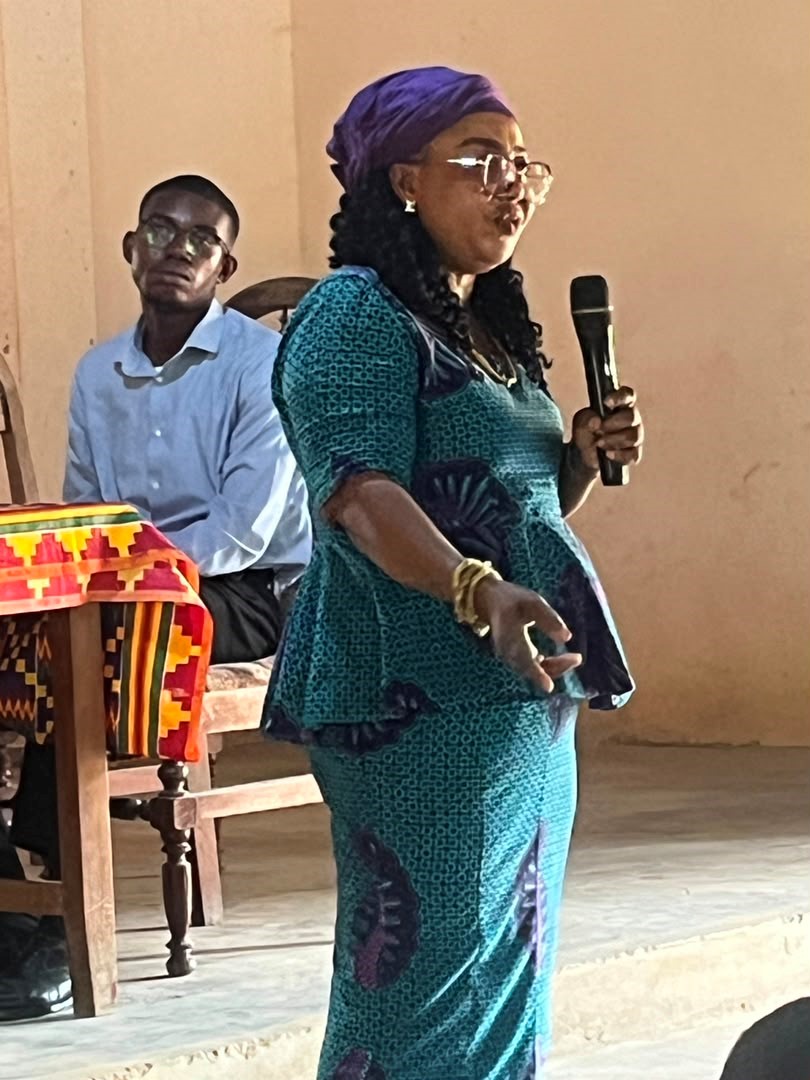
 Adolescents in Nkanfoa, a community in the Central Region, have been equipped with knowledge and practical guidance on sexual and gender-based violence, human rights, sexual and reproductive health, child protection, and online safety following a sensitisation programme organised under the Boys Safe Space initiative.
The programme, held on Friday, 7 August 2026, at the Atta Mills Community Centre in Nkanfoa, Cape Coast, brought together 63 adolescents, comprising 41 males and 22 females aged between 10 and 19 years. It was organised by the Department of Gender under the Ministry of Gender, Children and Social Protection, in collaboration with the Central Regional Coordinating Council (CRCC), with support from the United Nations Population Fund (UNFPA) Ghana.
The engagement sought to strengthen the capacity of adolescents, particularly boys and young men, to become advocates for gender equality, challenge harmful cultural practices, prevent sexual and gender-based violence, and promote the rights and dignity of women and girls.
Building a Generation of Responsible Male Champions
The initiative recognises the important role boys and young men can play in preventing violence, challenging harmful social norms, and promoting respectful relationships within their communities.
Recent engagements with parents and traditional leaders had highlighted continuing concerns about sexual and gender-based violence, early marriage, harmful cultural practices, and gender inequality. The Boys Safe Space programme was therefore designed to provide adolescents with relevant information, encourage responsible decision-making, and prepare them to become positive influences among their peers.
Speaking at the programme, the Regional Head of the Department of Gender, Ms. Richlove Amamoo, also known as Mama Awotsu Adzagba II, underscored the importance of involving men and boys in addressing sexual and gender-based violence, teenage pregnancy, sexually transmitted infections, and other challenges affecting adolescent development.
She emphasised the need to empower young people with the knowledge and values necessary to make informed decisions, respect the rights of others, and contribute to safer and more inclusive communities.
The programme also received the support of the traditional authorities of Nkanfoa. Nana Anafo IX, Chief of Nkanfoa, and Nana Ekuwa Takyiwaa I, Queen Mother of Nkanfoa, participated in the engagement, demonstrating the importance of traditional leadership in promoting the welfare, protection, and development of adolescents.
Tackling Sexual and Gender-Based Violence Through Education
A major component of the programme focused on sexual and gender-based violence and its consequences for the physical, emotional, social, and psychological well-being of young people.
Participants received education on rape, defilement, sexual harassment, indecent assault, and other forms of abuse. Facilitators also discussed the legal implications of sexual offences under Ghanaian law and encouraged adolescents to report abuse and seek assistance through appropriate channels.
The sessions emphasised respect for human rights, personal boundaries, accountability, and the shared responsibility of individuals, families, and communities to protect children and young people from violence and exploitation.
An open forum provided participants with the opportunity to ask questions, clarify misconceptions, and discuss concerns relating to sexual abuse, human rights, sexual harassment, and reporting mechanisms.
The interactive approach helped create a supportive environment in which adolescents could engage with sensitive issues and gain a better understanding of how to recognise harmful behaviour and respond appropriately.
Promoting Sexual and Reproductive Health and Responsible Decision-Making
The programme also addressed adolescent sexual and reproductive health and rights, with discussions on teenage pregnancy, sexually transmitted infections, peer pressure, risky sexual behaviour, puberty, and responsible decision-making.
A resource person from the Planned Parenthood Association of Ghana (PPAG) led discussions on these issues, helping participants understand the physical and emotional changes associated with adolescence and the importance of making informed choices.
Participants were encouraged to exercise self-discipline, resist negative peer influence, prioritise their education, and make decisions that support their personal development and future aspirations.
The discussions also highlighted the importance of perseverance, determination, and responsible conduct in helping adolescents achieve their educational and career goals.
Raising Awareness of Cyberbullying, Online Grooming and Sextortion
As young people increasingly engage with social media, online games, messaging applications, and other digital platforms, the programme highlighted the risks associated with unsafe internet use.
A presentation by the Management Information Systems (MIS) representative of the CRCC Information Technology Department addressed cyberbullying, online grooming, sextortion, and responsible internet use.
Participants learned about the importance of protecting personal and sensitive information online, recognising potentially exploitative interactions, and responding appropriately to online harassment and abuse.
The discussions underscored that digital platforms can expose adolescents to manipulation, intimidation, and exploitation if they are not adequately informed about online safety.
By incorporating digital safety into the programme, the organisers broadened the scope of child protection education to address both offline and online risks confronting young people.
Strengthening Human Rights Awareness and Peaceful Conflict Resolution
The Commission on Human Rights and Administrative Justice (CHRAJ) also contributed to the programme through a presentation on human rights, sexual and gender-based violence, sexual harassment, indecent assault, and peaceful conflict resolution.
The session reinforced the importance of respecting the rights and dignity of others, resolving disagreements peacefully, and recognising that violence and abuse should not be accepted as normal forms of behaviour.
Participants were encouraged to become responsible members of their families, schools, and communities by promoting respect, tolerance, and peaceful interactions.
Group work and presentations further strengthened their communication and advocacy skills, equipping them to discuss issues affecting adolescents with their peers, siblings, parents, and other community members.
Positive Outcomes and Stakeholder Collaboration
The programme recorded several important outcomes. Participants demonstrated increased awareness of sexual and gender-based violence, human rights, adolescent development, responsible internet use, and the consequences of harmful and risky behaviours.
The engagement also provided adolescents with a safe and supportive platform to express concerns, seek clarification, and discuss issues relevant to their development.
In addition, the programme strengthened collaboration among the Department of Gender, the CRCC, CHRAJ, PPAG, traditional authorities, and other stakeholders committed to adolescent protection and development.
The participation of traditional leaders and resource persons from different institutions demonstrated the value of coordinated community action in addressing complex social challenges affecting young people.
However, the programme also identified continuing concerns, including limited prior knowledge of human rights and sexual offences among some participants, negative peer influence, and increasing exposure to online grooming, cyberbullying, sextortion, and other forms of digital exploitation.
These challenges point to the need for sustained education and continuous engagement with adolescents, families, schools, and community leaders.
Call for Sustained Investment in Adolescent Protection
To build on the outcomes of the engagement, the programme recommended that the Boys Safe Space initiative be maintained and expanded to reach more adolescent boys within Nkanfoa and surrounding communities.
It also called for periodic sensitisation programmes in schools and communities to strengthen awareness of sexual and gender-based violence, human rights, sexual and reproductive health, child protection, and responsible digital behaviour.
Parents, guardians, traditional authorities, teachers, and relevant institutions were encouraged to work together to create safer environments in which adolescents can learn, develop, and seek support when confronted with abuse or exploitation.
Continued collaboration among institutions such as the Department of Gender, CHRAJ, PPAG, the Domestic Violence and Victim Support Unit (DOVVSU), and schools was identified as important to sustaining child protection interventions.
Such collaboration can help ensure that awareness-raising initiatives are complemented by appropriate reporting, referral, and support mechanisms for children and young people who experience violence or exploitation.
Investing in Safer Communities and a Better Future for Adolescents
The Boys Safe Space sensitisation programme in Nkanfoa represents an important step towards empowering adolescents with the knowledge, values, and skills needed to make responsible decisions and contribute to positive social change.
Through education, dialogue, practical group activities, and stakeholder engagement, the programme reinforced the message that preventing sexual and gender-based violence and promoting gender equality require the active participation of individuals, families, institutions, and communities.
As the initiative continues, sustained support and regular follow-up will be essential to help adolescents apply the lessons learned in their daily lives, reject harmful behaviours, report abuse through appropriate channels, and serve as positive role models among their peers.
Ultimately, investing in the safety, rights, and development of adolescents is an investment in stronger families, more inclusive communities, and a future in which every young person can grow and thrive with dignity and respect.