
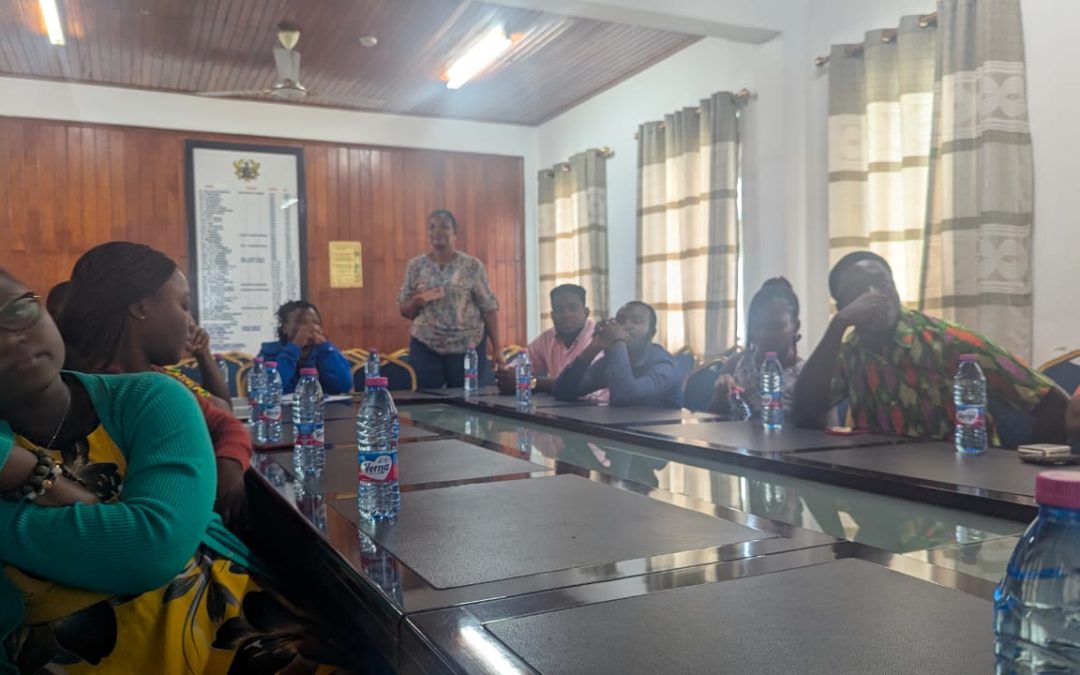
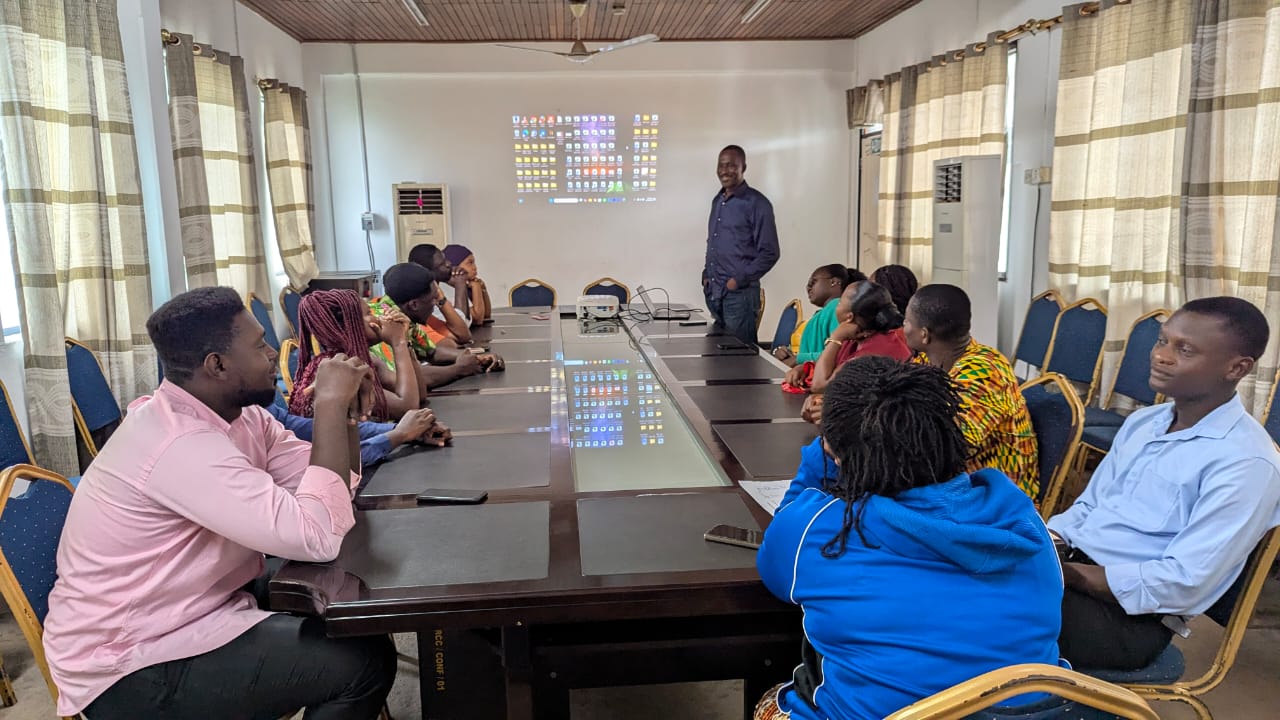
 The Central Regional Coordinating Council (CRCC) has organised an orientation programme for newly posted National Service Personnel to familiarise them with the operations of the Local Government Service, their roles and responsibilities, and the institutional structure of the Council.
The 2026 orientation programme, facilitated by Mr. Romeo Jagri, a Human Resource Manager, was held to equip the personnel with a better understanding of the Local Government Service and prepare them for their day-to-day duties within the institution.
The orintation took place on Thursday, 1st January, 2026 and commenced at 08:30 a.m. with an opening session during which Mr. Jagri welcomed participants and encouraged them to build strong relationships, promote unity, and work together as a family despite their differences.
Thirteen personnel, comprising seven males and six females, participated in the programme.
Understanding the Local Government Service and Central Regional Co-ordinating Council (CRCC)
As part of the orientation, Mr. Jagri took participants through the mission, vision, objectives, and core values of the Local Government Service. He also explained the functions of the Regional Minister, highlighting the Regional Minister’s role as the representative of the government in the Central Region.
Participants were further introduced to the work schedules of the CRCC and the various departments that collaborate to support development and improve the well-being of people in the region. The facilitator also explained the Council’s organisational structure, demonstrating how information flows from the lower levels through the various departments to senior management. The session was intended to help the personnel understand reporting lines, administrative procedures, and the importance of effective communication within the institution.
Personnel Raise Concerns and Make Recommendations
The interactive session provided participants with the opportunity to ask questions, share concerns, and make suggestions on issues affecting their service experience.
One of the concerns raised was the personnel’s anticipated meeting with the Regional Minister. In response, Mr. Jagri explained that the meeting had not yet taken place because of the Minister’s demanding schedule, but assured them that an opportunity to meet him would be provided.
Issues relating to the submission of monthly evaluation forms and claims also featured prominently during the discussion. Some personnel called for improved arrangements to enable them to submit their documents collectively and receive prompt attention, particularly those assigned to demanding offices where prolonged waiting could interfere with their official duties.
Madam Anna Amissah, a Human Resource Manager, acknowledged the concerns but noted that personnel were expected to manage their time responsibly during the submission process.
The discussion also touched on tourism development in the Central Region. Responding to a question about the Council’s role in investing in tourism, Mr. Jagri explained that the CRCC was not a profit-making venture. He encouraged the personnel to recognise the importance of promoting the region’s tourism potential and encouraging others to explore its attractions.
On employment prospects after national service, Mr. Jagri clarified that the Regional Minister’s responsibilities extended to the entire region and were not limited to personnel working at the Council. Madam Amissah encouraged the personnel to explore employment opportunities beyond the CRCC rather than limiting their aspirations to the institution.
Another suggestion concerned the provision of an eatery at the Council to improve convenience for staff. Mr. Jagri indicated that management had discussed the matter and was still working on it.
Personnel Urged to Invest in Professional Growth
In her closing remarks, Madam Amissah encouraged the personnel to approach their national service year as an opportunity for learning, personal development, and preparation for future employment.
She cautioned that completing national service did not guarantee immediate employment and urged the personnel not to become complacent in their current positions. Instead, she advised them to pursue further education, upgrade their professional qualifications, develop new skills, and acquire additional knowledge and experience.
She also encouraged them to take advantage of online learning opportunities and use the internet productively to access training and professional development resources.
Emphasising the importance of professionalism, Madam Amissah noted that communication, dressing, and body language contribute significantly to how individuals are perceived in the workplace. She urged the personnel to distinguish themselves through positive conduct, discipline, and professional behaviour.
She further encouraged them to maintain harmonious relationships with their colleagues and to speak up whenever they felt intimidated, unfairly treated, or harassed.
Beyond professional development, the personnel were advised to explore diverse employment opportunities in both the public and private sectors, as well as other career paths. Madam Amissah also stressed the importance of financial discipline, encouraging them to cultivate a savings habit regardless of how little they earned.
Promoting a Positive Workplace Culture
The orientation reinforced the importance of teamwork, mutual respect, effective communication, and continuous learning in the workplace. It also provided a platform for the personnel to express concerns and offer suggestions on administrative arrangements and their overall service experience.
The orientation programme ended at 1:08 p.m. with a closing prayer offered by Maame Aba Walter.
The CRCC’s orientation programme forms part of efforts to help newly posted National Service Personnel understand the institution’s operations and responsibilities while encouraging them to make the most of their service year through professional conduct, skills development, teamwork, and financial discipline.