
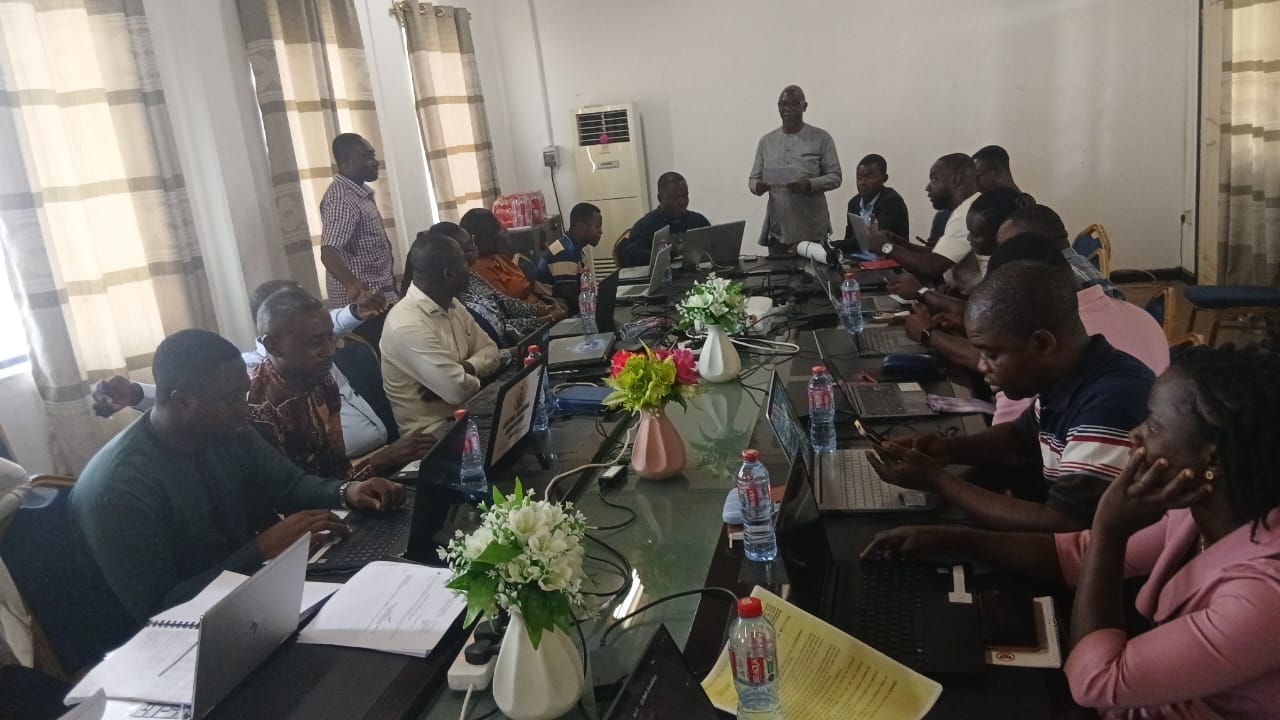
 The pilot programme, organised by the Office of the Head of the Local Government Service (OHLGS), was held at the Conference Room of the Central Regional Coordinating Council (CRCC) in Cape Coast on Monday, November 23, 2026. It brought together representatives of the Office of the Head of the Local Government Service, the Regional Coordinating Director, members of the technical team, heads of departments and units, and other participants.
In his opening address, Mr Ebenezer Azasu, the regional Director of the Department of Agriculture who stood in for the Regional Minister, Hon Eduamoah Ekow Panyin Okyere described the initiative as an important step towards strengthening the operational efficiency and institutional effectiveness of the Local Government Service. He noted that public sector institutions were increasingly expected to deliver timely, transparent and results-oriented services, making the adoption of appropriate operational tools necessary.
According to him, effective local governance depends largely on the availability of reliable information, clearly defined processes, efficient coordination and the capacity of institutions to monitor their performance. He observed that the introduction of the operational tools presented an opportunity to improve institutional processes, access and validate staff information, and enhance administrative responsibilities.
The Regional Director emphasised the significance of the pilot programme to the Central Region, considering the diverse institutional needs and operational challenges of its Metropolitan, Municipal and District Assemblies (MMDAs). He expressed the expectation that the tools being introduced would be practical, responsive to the realities of the Assemblies and capable of supporting efficient service delivery across all levels of the Local Government Service.
Mr Azasu urged participants to approach the exercise as a practical assessment rather than a routine training session or mere demonstration of a new system. He explained that the programme was intended to test the suitability, functionality and effectiveness of the tools before their wider implementation.
He further encouraged participants to test their assigned workflows using realistic institutional scenarios, verify the accuracy of staff and organisational information, and promptly report any errors, gaps or unclear processes. He stressed that feedback from officers who work with these processes daily would be critical to the success of the pilot exercise.
Mr Azasu also called on management of the Regional Coordinating Council and the respective Assemblies to demonstrate their commitment by making relevant officers available, supporting the validation of staff data, providing the necessary logistics and ensuring that issues identified during the exercise received the appropriate attention and follow-up.
On the adoption of technology-driven solutions, he cautioned that the successful introduction of operational tools required more than the availability of software. He highlighted the importance of institutional ownership, management support, staff cooperation and a willingness to embrace change. He therefore urged the various institutions to move away from inefficient practices and adopt improved approaches that promote accuracy, efficiency and accountability.
The Regional Director, commended the Office of the Head of the Local Government Service for the initiative and for selecting the Central Region as one of the regions participating in the pilot programme. He expressed confidence that the exercise would provide valuable insights to guide the refinement of the tools ahead of their eventual rollout across the Local Government Service.
He also assured the technical team of the Council's cooperation and support throughout the exercise, encouraging participants to take full advantage of the opportunity to interact with the team and contribute meaningfully towards improving the system.
Mr Azasu reiterated that the ultimate objective of the operational tools should be to strengthen public institutions, improve administrative efficiency and, ultimately, enhance service delivery to the people they have been entrusted to serve.
The Regional Director, subsequently declared the Local Government Service Operational Tools Pilot Training Programme for the Central Region officially open and wished participants fruitful deliberations and a successful exercise.